
By Gaby Dufresne-Cyr, CBT-FLE
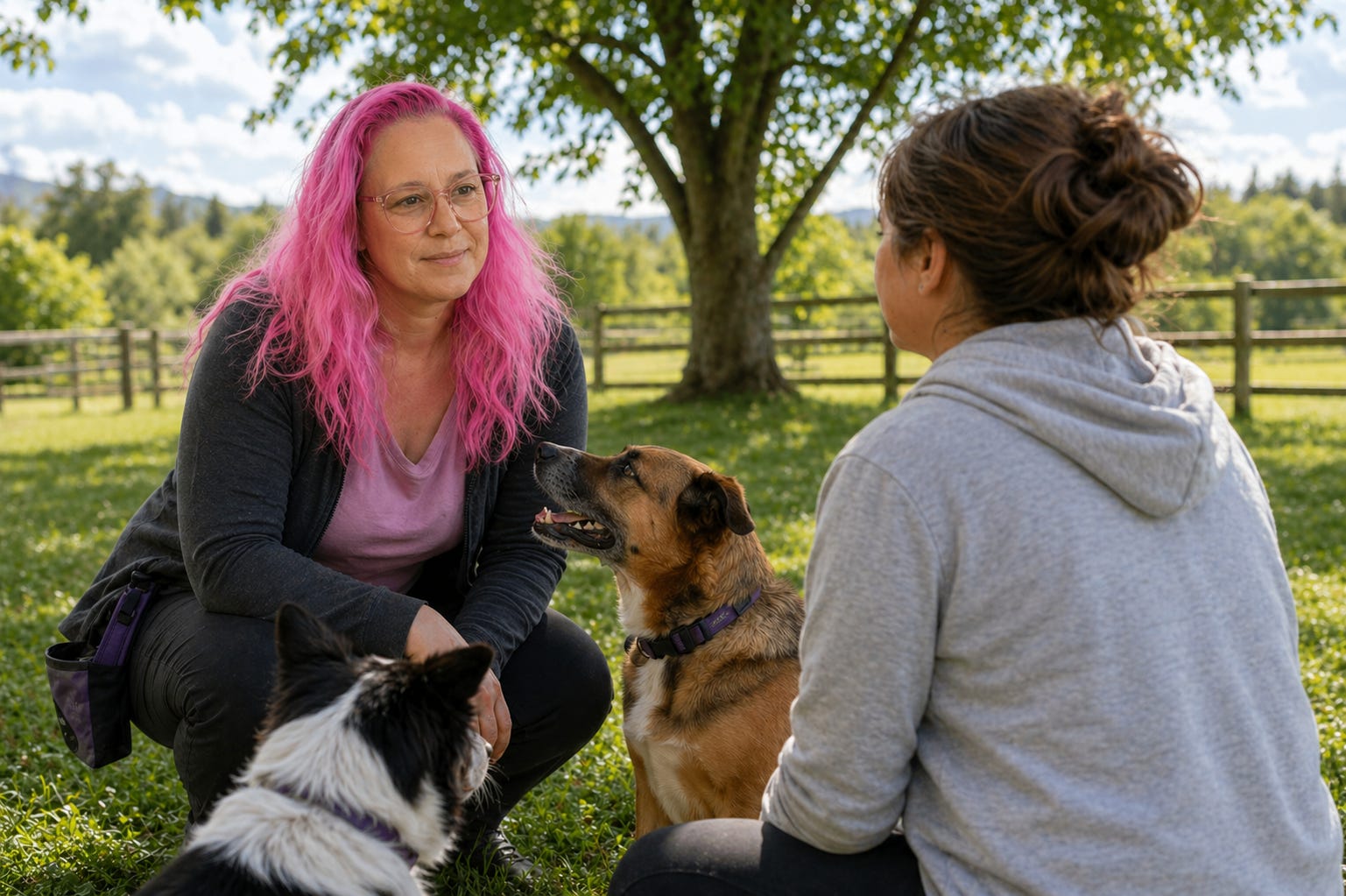
There’s a moment in every animal trainer’s journey when knowledge shifts from acquired to lived experience. It’s quiet, almost imperceptible at first. Professionals pause before a cue, softening their body, and recognizing that learning unfolds between beings rather than within one. This is where mentorship and Social Cognitive Animal Training (SCAT) meet as a shared field of experience shaped through relationship, attention, and meaning.
Animal Training Mentorship
Mentorship in animal training carries a depth that extends far beyond the transfer of technique. It’s a relational process grounded in observation, reflection, and attunement. Within this space, the mentor embodies a way of being with animals that goes beyond instruction alone.
The student witnesses how timing emerges from presence, how choices arise through understanding, and how communication develops through sensitivity to context.
Learning becomes situated, shaped by real interactions rather than abstract rules. The environment, the animal, and the human form a living system in which each moment offers information.
Social Cognitive Animal Training provides a framework that supports this experiential learning. Rooted in the understanding that behaviour develops through the dynamic interaction of cognitive, social, and environmental influences, SCAT invites both trainer and animal into a shared process of meaning-making.
The mentor treats attention, retention, motivation, and motor reproduction as interwoven elements influenced by relationship and emotional state. The animal learns within a context of safety and engagement, while the trainer learns to read, interpret, and respond with increasing clarity.
When mentorship unfolds within this framework, something remarkable takes shape. The student understands why behaviour emerges and how their own presence influences that process; observation deepens.
Subtle shifts in posture, gaze, and breath become relevant pieces of information. The animal’s responses transform into communication rather than compliance. This shift carries a profound impact on the trainer’s development, as it nurtures autonomy and confidence rooted in understanding rather than repetition.
Mentorship Benefits the Animal
For the animal, the benefits emerge through a sense of agency and trust. Learning takes place within an environment that honours exploration and choice. The dog engages with the task through curiosity, supported by clear and consistent feedback.
Emotional regulation develops alongside behavioural skills, as the horse experiences guidance without pressure. The presence of both mentor and student contributes to a social environment rich in information, where observation and imitation can naturally occur. The animal becomes an active participant in the learning process, shaping outcomes through interaction.
A mentor’s role within this triadic relationship holds a unique significance. Through modelling, teachers display how to navigate complexity with clarity and patience. Their presence offers stability, allowing students to experiment, reflect, and refine their approach.
Feedback emerges as a collaborative process, grounded in shared observation rather than correction. The mentor guides the mentee’s attention toward relevant details, helping him or her integrate theory with lived experience. Over time, students internalize this process, carrying it forward into their own practice.
Knowledge Integration
This integration of mentorship and SCAT also cultivates a deeper ethical awareness. The dog trainer develops sensitivity to the animal’s emotional and cognitive experience, recognizing that behaviour reflects an ongoing interaction with the environment.
Training decisions align with principles of respect, consent, and problem-solving. The focus shifts toward creating conditions that support learning rather than directing outcomes through control. This perspective enriches the trainer’s work, fostering a sense of responsibility.
Mentorship provides the structure, while Social Cognitive Animal Training offers the lens through which professionals understand learning. Together, mentor and mentee create a space where growth unfolds through connection, guided by curiosity, presence, and shared experience.
In the end, what remains is more than a trained behaviour or a completed program. What remains is a way of perceiving and adapting, and a way of being with animals that honours their capacity to learn, to communicate, and to partake.
Mentorship within the SCAT framework shapes trainers who carry this perspective forward, influencing every interaction they encounter. It is a process that continues to evolve, grounded in the understanding that learning lives within relationships, and that both humans and animals change through experience.