
Professional Dog Trainer Certification Curriculum and Structure
The Animal Behaviour Apprenticeship Program
This program is designed for individuals who want to become skilled, thinking dog trainers.
You will learn how dogs perceive, process, and respond to the world, and how to train through cognition.
Through hands-on experience and applied theory, you will develop the ability to observe, adapt, and make informed training decisions in real time.
The professional dog trainer certification course is a fully hands-on, part-time course for English-speaking adults.
Course Structure
- Duration: 400 hours
- Saturday & Sunday 9:00 to 17:00
- Current Cohort Registration: 2027-2028
- Homework: Practical
- Exams: Theoretical and Practical
Payment Plan
- Mandatory Deposit
- 9 months plan
- No interest
CURRENT REGISTRATION IS FOR THE 2027-2028 SCHOOL YEAR
Why choose the Dogue Academy dog trainer school?
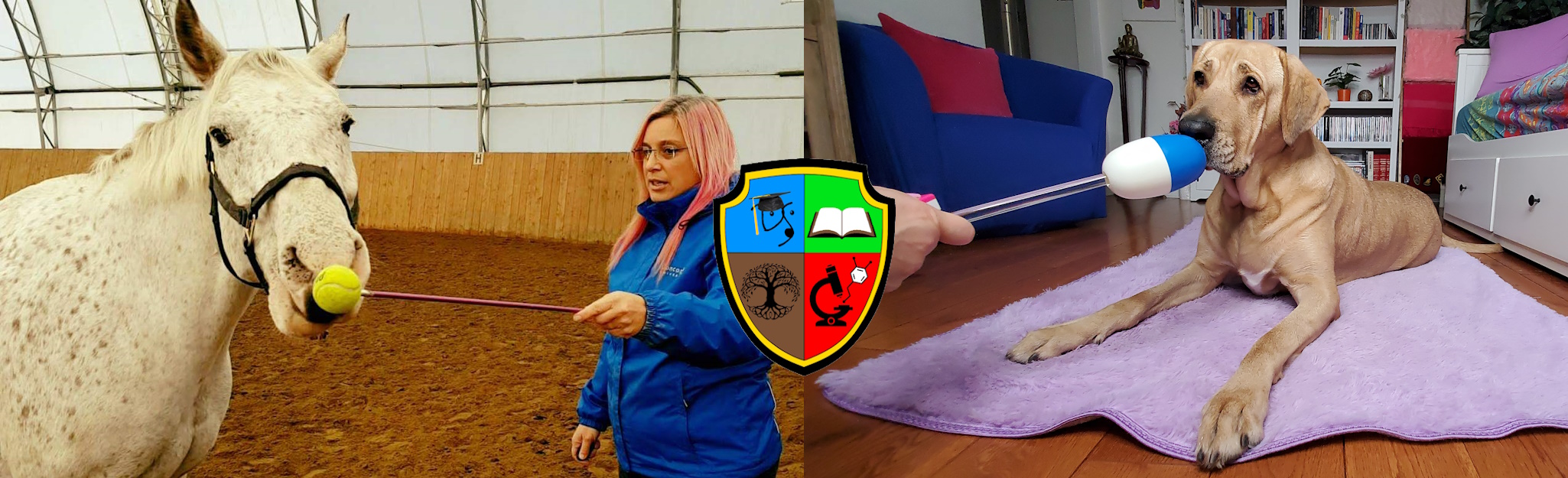
This program is built on 40 years of experience training dogs, wolves, horses, and other species using social cognitive learning (SCT) principles.
At the Dogue Academy, students are not only taught techniques, but how to understand behaviour as a social, relational, cognitive, and environmental processes.
This course allows students to integrate learning theory, practical skills, and real-world application to work with more complex behaviours and training environments.
By the end of this program, you will be able to:
- Read and interpret canine behaviour with precision
- Train without relying on constant reinforcement or repetition
- Adapt your training to different dogs, environments, and contexts
- Design effective behaviour modification plans
- Work confidently with clients and complex cases
- Think critically instead of following rigid methods
Certification and accreditation upon completion
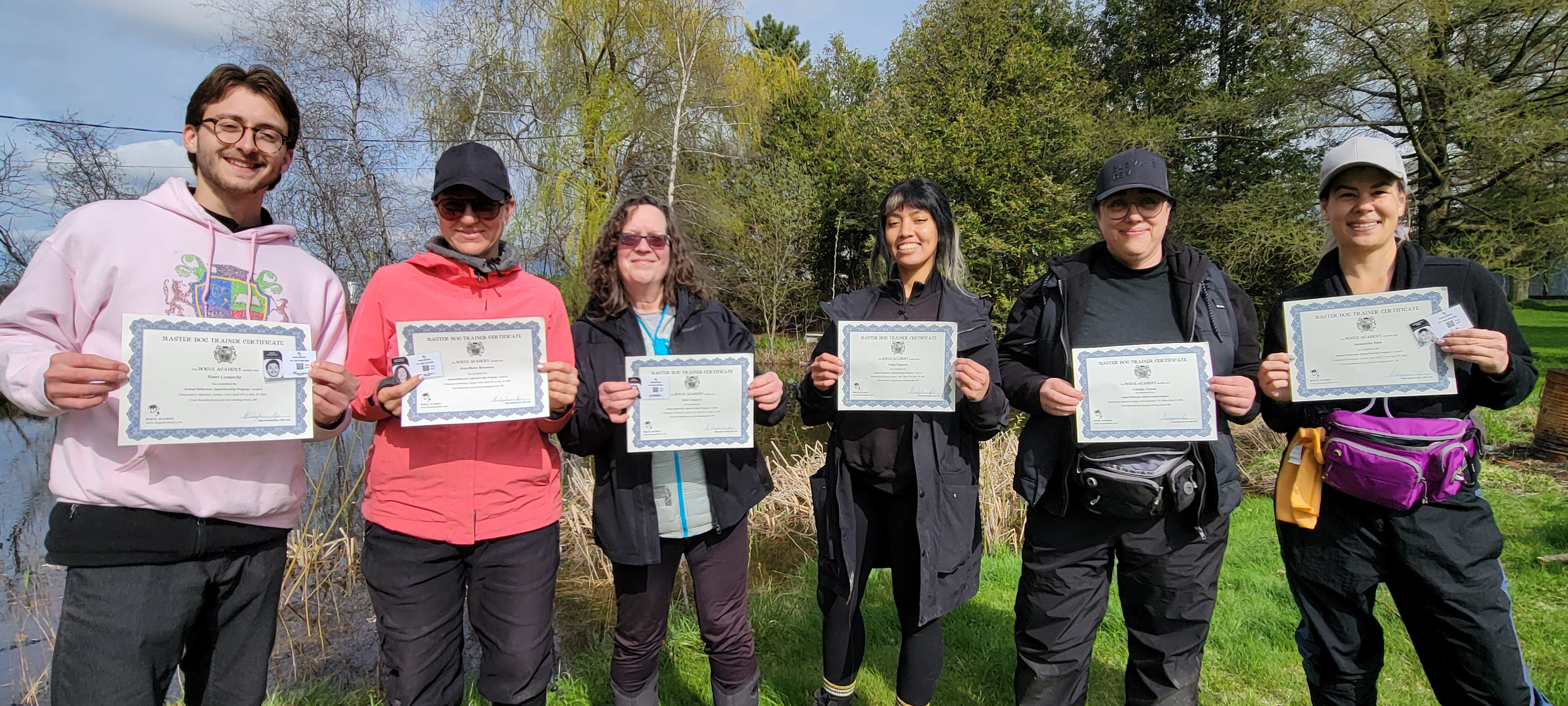
Upon successful completion of the course, you will receive a certificate confirming that you have completed the Animal Behaviour Apprenticeship Program.
Graduates also receive a membership card valid for five years, along with a profile on Dogue Academy’s alumni page (launched in 2025).
Your membership card helps establish your professional credibility by allowing clients to verify your credentials.
Membership can be renewed with proof of continuing education, including courses, seminars, or workshops completed through Dogue Academy or other recognized programs.
Requirements and Prerequisites for Enrolment
- Have a passion for working with people and dogs
- Possess basic knowledge about dogs or other animals
- Have a basic understanding of psychology or training
- Dog training experience is preferred, but not required
- Conduct the mandatory interview before registration
- Submit your application no later than Labour Day
Become A Professional Certified Dog Trainer
Now is the time to take the next step in your education.
If you wish to train therapy or service dogs, or prefer to train exotic animlas, this program is for you.
Start your journey toward becoming a certified dog trainer today!
Professional Dog Trainer Certification Course Breakdown
| ABA Semester-1 Foundations | ABA Semester-2 Application | |
| Module 1: Canine Biology | Module 1: Learning Theory 201 | |
| Module 2: Canine Behaviour | Module 2: Behaviour Modification 201 | |
| Module 3: Learning Theory 101 | Module 3: Behaviour Problems 201 | |
| Module 4: Training Tools & Equipment | Module 4: Shaping & Capturing | |
| Module 5: Health Care & Nutrition | Module 5: Therapy Dog Training 201 | |
| Module 6: Behaviour Problems 101 | Module 6: Building a Business Plan | |
| Module 7: Behaviour Modification 101 | Module 7: Service Dog Training 201 |
| ABA Semester-3 Integration | ABA Semester-4 Consolidate | |
| Module 1: Learning Theories 301 | Module 1: Learning Theories 401 | |
| Module 2: Therapy Dog Training 301 | Module 2: Exotic Animal Training 401 | |
| Module 3: Dealing with Difficult Clients | Module 3: Group Development Theory | |
| Module 4: Scientific Research Project | Module 4: Contingency Training | |
| Module 5: Behaviour Modification 301 | Module 5: Class Group Project | |
| Module 6: Effective Communication | Module 6: Enrichment Construction | |
| Module 7: Service Dog Training 301 | Module 7: Training Specialization |