
By Gaby Dufresne-Cyr, CBT-FLE
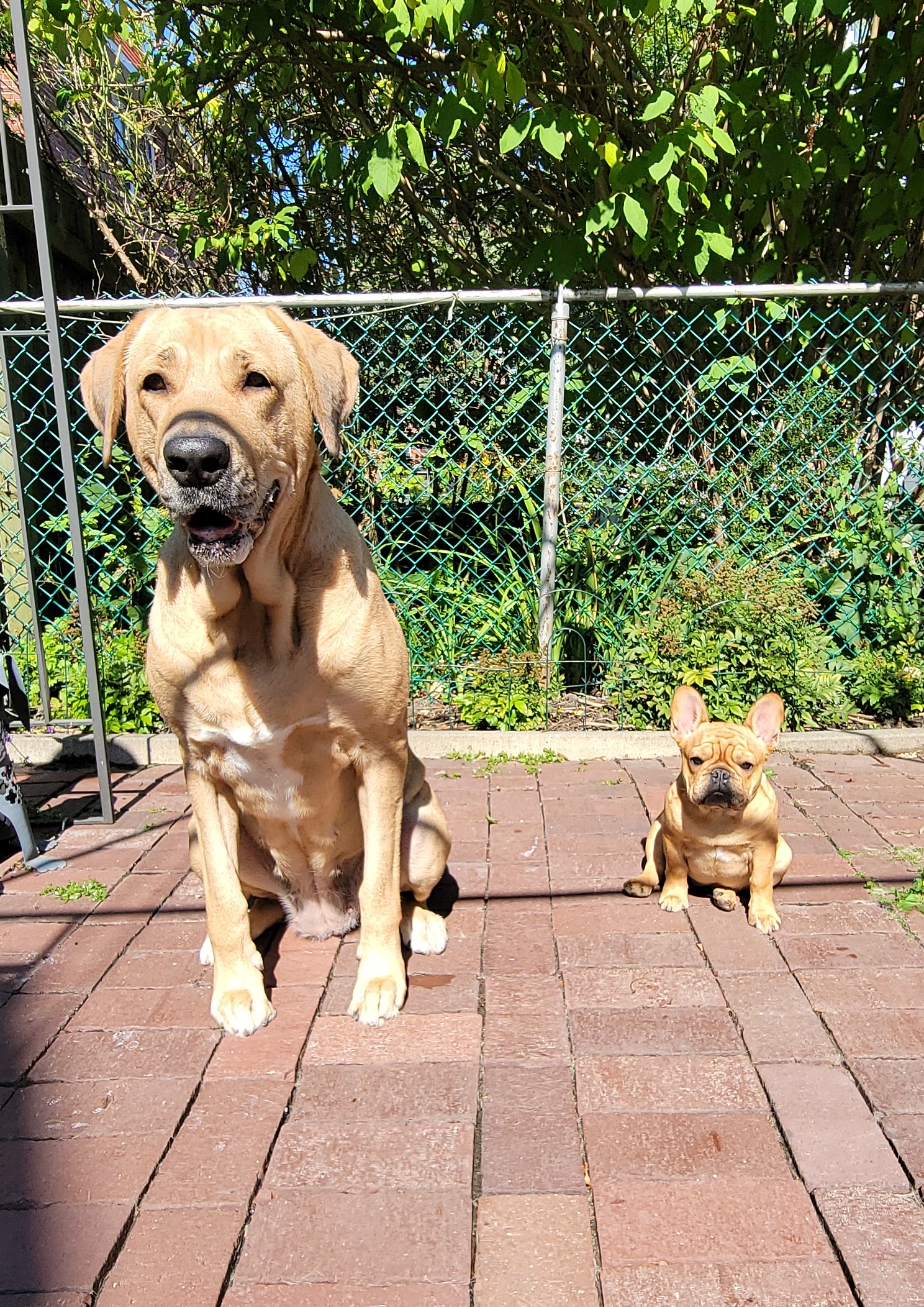
In canine training and behaviour science, the prevalent assumption is that puppy-to-puppy play alone ensures optimal socialization. While peer interactions contribute to motor skills and bite inhibition, they lack the structured guidance that well-socialized adult dogs provide. Grounded in social cognitive learning theory and developmental ethology, research demonstrates that puppy–adult interactions offer superior behavioural, cognitive, and emotional outcomes essential for producing resilient, adaptable adult dogs.
Adult dogs inherently communicate boundaries through nuanced body language, calm vocal cues, or gentle inhibition. Puppies are unable to replicate or enforce these signals effectively among themselves. This natural regulation teaches puppies self-control and impulse modulation within a predictable framework, skills that reduce the risk of inappropriate or maladaptive social behaviours (Scott & Fuller, 1965).
Observational Learning and Role Modelling
Bandura’s (1977, 1986) social cognitive learning theory emphasizes that behaviour is acquired not only through reinforcement but also by observing competent models. In canine contexts, puppies learn leash manners, human-centric behaviours, and environmental mimicking strategies by watching adult dogs confidently perform them.
Evidence also supports observational learning in dogs: puppies that watch adults pulling a cart using a ribbon solved the task significantly faster (average of 9 seconds) compared to naïve puppies (average of 697 seconds) (Adler & Adler, 1977). This suggests that adult presence accelerates learning while reducing trial-and-error risks.
Enhancing Problem-Solving and Decision-Making Skills
Puppies are naturally impulsive, with underdeveloped executive regulation. Adult dogs, however, approach challenges with measured responses. By modelling these strategies, adults provide templates for persistence, patience, and flexible problem-solving. These experiences support the development of decision-making and inhibitory control, a critical strategy for functioning successfully in human environments (Mills, 2005).
Puppy-only play sessions often escalate into overstimulation, reinforcing reactive rather than adaptive behaviours. The presence of adult dogs shifts reinforcement contingencies: puppies who self-inhibit and approach politely are rewarded with interaction, while pushy or inappropriate behaviours are consistently ignored or corrected (Howell, King, & Bennett, 2015). This naturalistic system fosters adaptive decision-making and emotional regulation.
From an attachment perspective, calm adult dogs serve as secure bases. Puppies exploring alongside adults demonstrate reduced stress behaviours and increased exploratory drive, consistent with resilience theory (Mertens & Unshelm, 1996). This scaffolding supports long-term coping skills, allowing dogs to adapt to novel or stressful environments.
The socialization period between 4 and 12 weeks is the most influential phase for behavioural and emotional development (Scott & Fuller, 1965). Structured exposure during this time, especially to adult role models, yields measurable improvements in boldness, persistence in problem-solving, and adaptability (Kutsumi et al., 2013).
However, the effects of early experiences are not always permanent. Continued reinforcement through adolescence is necessary to maintain long-term behavioural benefits (Gazzano et al., 2008). Well-socialized adult dogs thus act as essential mediators in sustaining these gains.
Professional Implications for Training and Behaviour Consulting
- Embed adult–puppy interactions into structured socialization programs.
- Facilitate observational learning by allowing puppies to watch adults navigate human environments.
- Extend reinforcement beyond the socialization window to consolidate behavioural stability.
- Use adults as anchors to foster resilience and reduce stress in novel contexts.
Puppy–adult socialization provides a framework for learning that cannot be replicated through puppy-only interactions. Well socialized adult dogs act as role models, offering critical feedback, modelling adaptive behaviour, and providing emotional security. These interactions accelerate cognitive development, improve decision-making, and foster resilience; these outcomes align with both developmental science and social cognitive learning theory.
For dog trainers and behaviour professionals, the evidence underscores the need to prioritize structured puppy–adult encounters during the sensitive socialization window and beyond. By leveraging adult canine role models, we set the stage for puppies to grow into stable, confident, and socially competent dogs capable of thriving in complex human environments.
References
- Adler, L. L., & Adler, H. E. (1977). Ontogeny of observational learning in the dog (Canis familiaris). Developmental Psychobiology, 10(2), 267–271. https://doi.org/10.1002/dev.420100310
- Bandura, A. (1977). Social learning theory. Prentice Hall.
- Bandura, A. (1986). Social foundations of thought and action: A social cognitive theory. Prentice Hall.
- Gazzano, A., Mariti, C., Notari, L., Sighieri, C., & McBride, E. A. (2008). Effects of early gentling and early environment on emotional development of puppies. Applied Animal Behaviour Science, 110(3–4), 294–304. https://doi.org/10.1016/j.applanim.2007.05.007
- Howell, T. J., King, T., & Bennett, P. C. (2015). Puppy parties and beyond: The role of early age socialization practices on adult dog behavior. Veterinary Medicine: Research and Reports, 6, 143–153. https://doi.org/10.2147/VMRR.S62081
-
Jones, A. C., & Gosling, S.D. (2005). Temperament and personality in dogs (Canis familiaris): A review and evaluation of past research. Applied Animal Behaviour Science, 95(1–2), 1-53. https://doi.org/10.1016/j.applanim.2005.04.008. ISSN 0168-1591.
- Kutsumi, A., Nagasawa, M., Ohta, M., & Ohtani, N. (2013). Importance of puppy training for future behavior of the dog. The Journal of veterinary medical science, 75(2), 141–149. https://doi.org/10.1292/jvms.12-0008
- Mertens, P. A., & Unshelm, J. (1996). Effects of Group and Individual Housing on the Behavior of Kennelled Dogs in Animal Shelters. Anthrozoös, 9(1), 40–51. https://doi.org/10.2752/089279396787001662
- Mills, D. S., Ramos, D., Estelles, M. G., & Hargrave, C. (2006). A triple blind placebo-controlled investigation into the assessment of the effect of Dog Appeasing Pheromone (DAP) on anxiety related behaviour of problem dogs in the veterinary clinic. Applied Animal Behaviour Science, 98(1-2), 114-126.94(3–4), 195–198. https://doi.org/10.1016/j.applanim.2005.08.012
-
Scott, J. P., & Fuller, J. L. (1965). Genetics and the social behavior of the dog. University of Chicago Press.