
By Gaby Dufresne-Cyr, CBT-FLE
Training animals, whether they are performance dogs, pets, or exotic species, requires a deep understanding of animal behaviour, psychology, learning theories, and the impact of various forms of stimulus conditioning. While the principles of learning and conditioning apply across species, the approach to training each type of animal can differ significantly.
This blog will explore the differences in training performance and leisure training in domestic and exotic animals, focusing on forms of stimulus conditioning—simultaneous and delayed—and how classical conditioning, such as clicker training, is adapted for domestic and exotic animals.
Performance dogs—such as those involved in agility, obedience, and protection sports—require specialized training to achieve peak performance. Training these dogs involves creating highly motivated and reliable responses under various conditions. It also implies hight rates of reinforcement and stimulus control.
Loading the Clicker: Simultaneous, Delayed, and Backward Conditioning
In performance dog training, both simultaneous, delayed, and backward stimulus conditioning are used strategically to reinforce desired behaviors. To understand the three options, I will forcus on loading the clicker as our primary example.
Simultaneous conditioning occurs when the conditioned stimulus (clicker) is presented at the same time as the unconditioned stimulus (food) to create a conditioned response. This method is beneficial when teaching foundational behaviours because it creates a clear association between the command and the reward. For instance, when a dog hears click and is immediately rewarded, the sounds becomes a conditioned response, meaning the dog excepts a food reward.
Delayed conditioning occurs when the conditioned stimulus (clicker) is presented first, followed by the unconditioned stimulus (food) to create a conditioned response. This approach helps build more complex behaviours and ensures that the dog understands which behaviour is being rewarded. For example, a dog in an agility competition might need to wait at a start line (holding a stay command) before running a course, and the delayed reward helps reinforce this patient behaviour.
Backward Conditioning occurs when the conditioned stimulus (clicker) follows the unconditioned stimulus (food) to create a conditioned response. Backward conditioning is rarely used in day-to-day dog training, but under certain circomstances it is beneficial. For example, loading the clicker to train an exotic, aggressive, or fearful anmal such as dogs or wolves, might be a sound decision.
Training Domestic Animals - Dog Training
Clicker training, a form of classical conditioning, is highly effective for performance dogs. The clicker acts as a conditioned reinforcer, bridging the time between the desired behaviour and the delivery of a primary reinforcer, like a treat. The clear, consistent sound of the clicker becomes associated with a reward, allowing precise marking of the desired behaviour. For performance dogs, this precision is critical to fine-tuning movements, improving timing, and reducing latency in response to commands.
Training dogs that belong to clients involves a different approach. Unlike performance dogs, whose handlers are often highly involved in training, client-owned dogs may have varied levels of prior training, socialization, and behavioral issues. When training clients' dogs, trainers either use simultaneous and delayed conditioning, but the emphasis can shift based on the dog's history and the owner's needs.
Simultaneous Conditioning: This is often used initially to establish a strong, positive association with commands and basic obedience cues, especially in dogs that are new to training or need rehabilitation. For example, using simultaneous conditioning for a sit command, where the treat immediately follows the clicker sound, helps create a quick and clear association, making it easier for inexperienced dogs and owners to understand.
Delayed Conditioning: For more experienced dogs or to address specific behavioural problems, delayed conditioning is used to teach impulse control and to help the dog understand that rewards are contingent on maintaining behaviour over time. This can be crucial for dogs with issues like jumping up, where the reward is delayed until the dog maintains calm behaviour.
Classical Conditioning and Clicker Training Domestic Animals
For clients' dogs, clicker training can be a game-changer. The clicker provides consistent feedback, which is especially helpful for inexperienced dog owners who may struggle with timing and consistency. By conditioning the clicker sound with a reward, the dog learns to associate the click with positive outcomes, reinforcing good behaviour more effectively. In this context, the clicker serves as a clear communication tool that bridges the gap between professional training sessions and the owner's daily interactions with their dog.
Training Exotic Animals
Training exotic animals—such as birds, reptiles, big cats, or marine mammals—presents unique challenges due to their diverse behavioural repertoires, environmental needs, and natural instincts. These animals often require different training environments and considerations for safety and welfare.
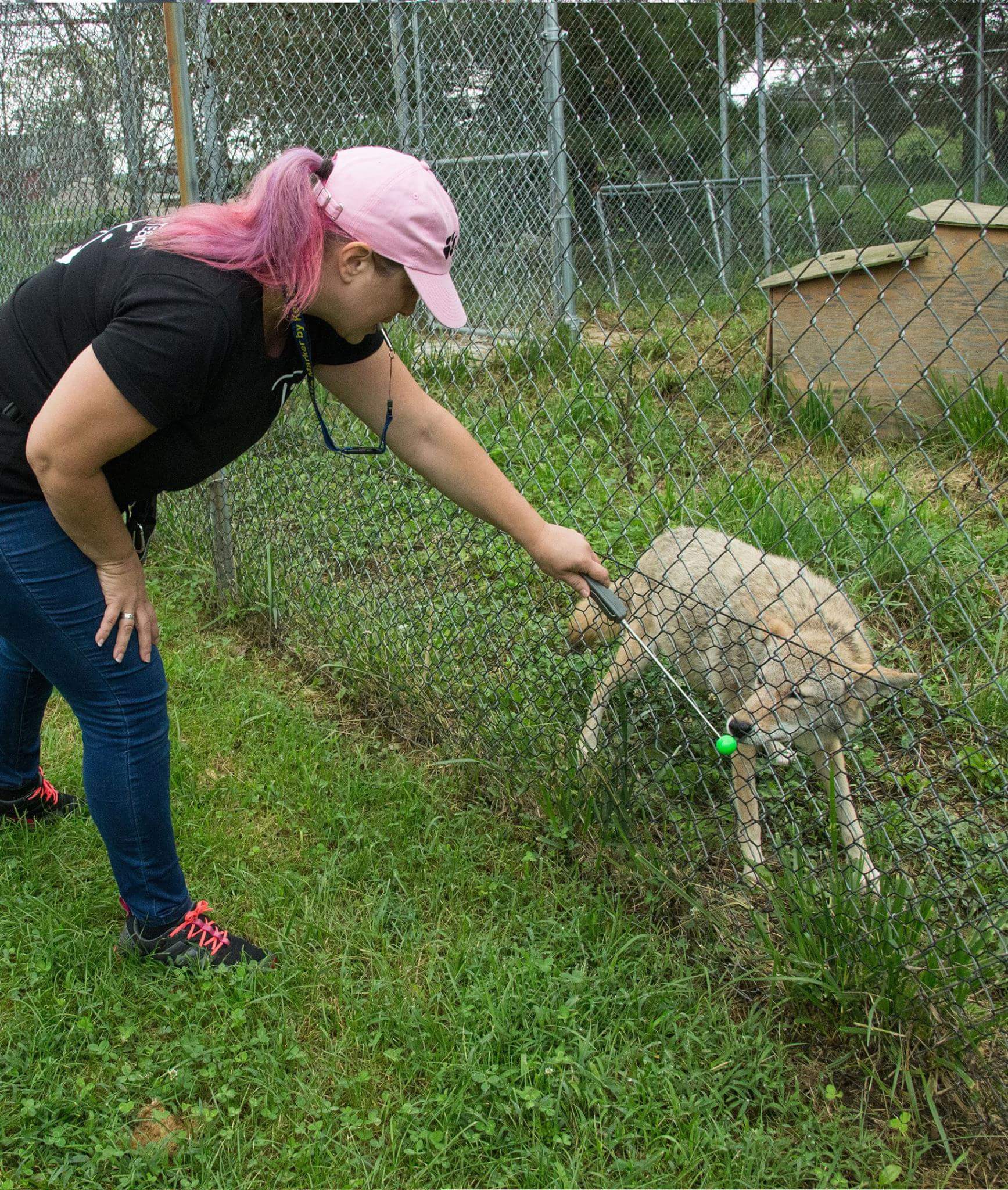
Stimulus conditioning for exotic animals varies significantly from that for domestic animals for a few reasons. First, we work in protected contact, which means we do not have a direct access to the animals mouth. Secondly, exotic animals retain their aggressive behaviours which poses risks to their trainers, thus limiting frustration is imperative. Finally, dietary, environmental, and reproductive criteria pose extra challenges for trainers.
Simultaneous Conditioning: Often used initially to build trust and establish a positive association with the trainer and the training environment. For example, a zookeeper might present the cliker simultaneously with a food reward to a tiger. This helps the animal quickly associate the cue with a positive outcome, laying the groundwork for more complex behaviours.
Backward Conditioning: When feeding the animal poses constraints, for example, we must use a food chute, we must present the food first and click when the animal eats it. Backward conditioning is ideal for highly dangerous, aggressive or fearful animals. For example, I place a piece of meat in the chute, open it, and when the animal reaches and eats it, I sound the clicker or whistle.
Delayed Conditioning: As training progresses, delayed conditioning is crucial for teaching exotic animals more complex behaviours that require patience and control. For instance, in training a big cat to voluntarily enter a crate, the cue is given, and the reward is delayed until the desired action is completed safely. This helps reinforce that only the complete behaviour earns the reward, which is essential for managing animal behaviour in a controlled environment.
Classical Conditioning and Clicker Training Exotic Animals
Clicker training is also employed with exotic animals but must be adapted based on the species’ sensory modalities and cognitive abilities. For birds and marine mammals, clickers or other auditory signals (like whistles) are highly effective due to these animals' acute hearing. The sound of the clicker becomes a conditioned reinforcer, similar to dogs, signaling that the behaviour performed will be followed by a reward. This method is widely used in marine mammal training, where trainers often use whistles to mark desired behaviours and bridge the time until a fish reward is delivered.
For peptiles and less social mammals, the use of a clicker or any form of classical conditioning can be more challenging due to differences in sensory perception and motivation. Trainers may rely on other forms of stimuli, such as visual or tactile cues, to signal a reward. Here, conditioning must be adapted to suit the animal's natural behaviours and environment. For example, target training with a stick or visual marker can be more effective for reptiles that respond more to sight than sound.
While the foundational principles of learning and conditioning apply across all species, the practical application of these principles—especially in terms of simultaneous, delayed, and backward conditioning and the use of classical conditioning like clicker training—varies greatly depending on whether you are training performance dogs, clients' dogs, or exotic animals.
Performance dogs benefit from highly precise training methods to maximize their abilities. Clients require adaptable strategies that consider the owner's involvement and the dog's prior training. Exotic animals, with their unique behaviours and sensory perceptions, require customized training approaches that prioritize safety, welfare, and effective communication.
Understanding these nuances and adjusting training techniques accordingly ensures successful outcomes, builds trust, and enhances the relationship between humans and animals, whether domestic or exotic.