
By Gaby Dufresne-Cyr, CBT-FLE
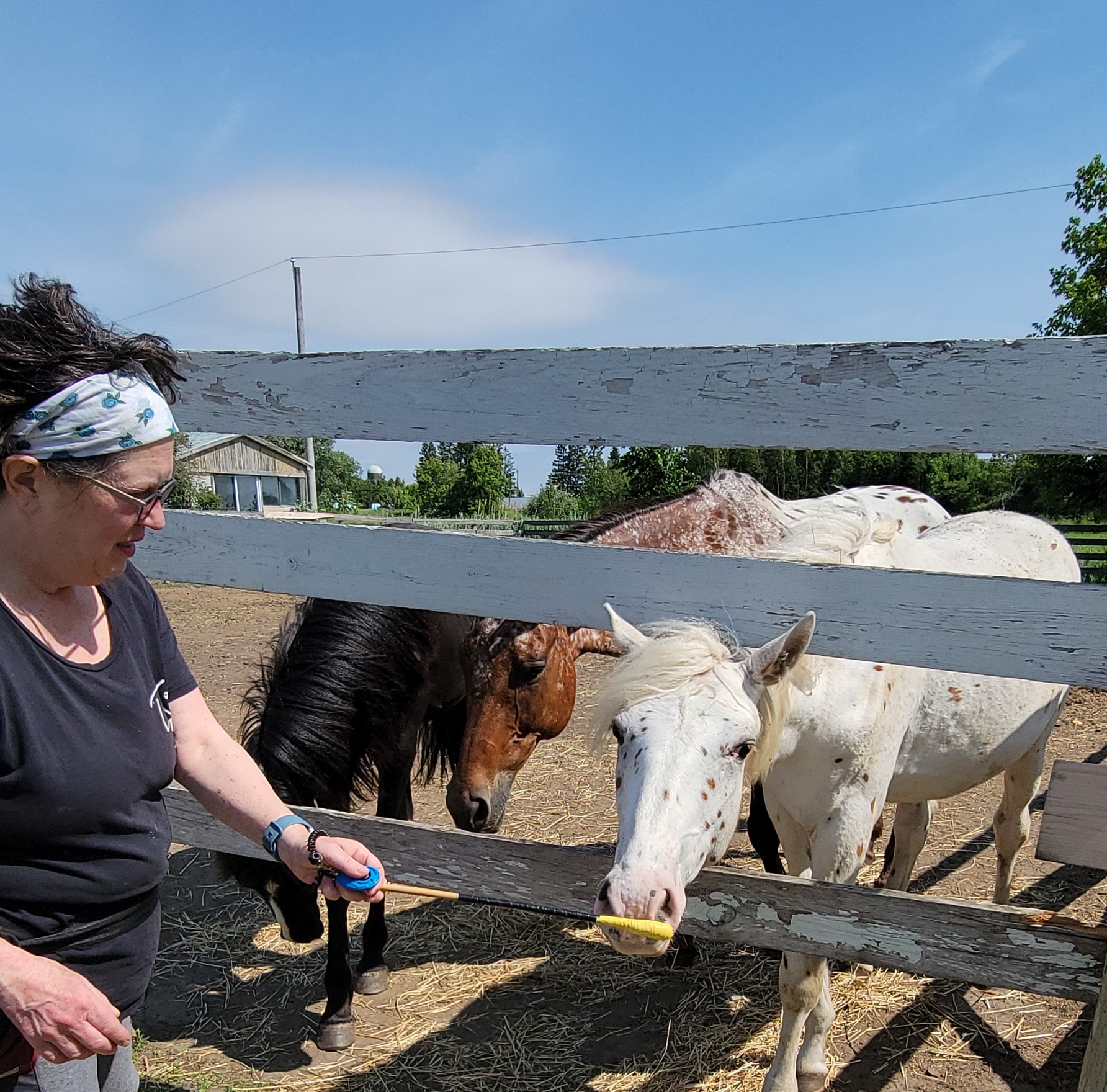
Horses live in a world where anticipation is essential. As prey animals, their survival depends on predicting what will happen next, physically, socially, and emotionally. Cognitive science supports what experienced equestrians have long observed: horses are reacting to pressure or release, and interpreting patterns, forming expectations, and choosing responses based on what those patterns predict.
Albert Bandura’s social cognitive learning theory offers a useful lens here. Bandura argued that cognition shapes learning, by understanding situations and predicting outcomes. In horses, this is visible in how quickly they learn sequences, routines, and emotional climates. A horse entering an arena already knows what usually happens there. That knowledge shapes their posture, attention, and willingness to engage before the person gives a cue.
Cognitive scientists describe this as expectancy learning. Horses do not need repeated correction to adjust behaviour; they need clarity. When cues are predictable and outcomes consistent, horses relax. When signals are ambiguous or emotionally charged, anticipation turns into tension and frustration. What looks like resistance is often a horse attempting to resolve uncertainty and confusion.
Horses deeply tie problem-solving and decision-making to perceived safety. A horse that rushes, freezes, or avoids is often making a logical choice based on previous outcomes. If slowing down has led to pressure, the rider reinforces rushing. Similarly, if offering curiosity resulted in negative emotions, withdrawal becomes adaptive. These are not training problems; they are cognitive conclusions.
When trainers acknowledge anticipation as part of learning, training shifts from control to communication. The goal becomes helping the horse predict correctly. Calm behaviour emerges from the horse understanding what is coming and trusting the outcome.
Bandura emphasized that cognition mediates behaviour. For horses, this mediation is constant. Their behaviour reflects what is happening now, and what they believe will happen next. Training that honours this process supports emotional balance, clearer learning, and more reliable cooperation.
In this way, cognition is not separate from behaviour; it explains it.