
By Gaby Dufresne-Cyr, CBT-FLE
In recent years, mirror neurons have captured the interest of scientists and animal behaviourists alike. Originally discovered in macaque monkeys in the 1990s, these specialised neurons have been linked to empathy, imitation, and social learning (Rizzolatti & Craighero, 2004). In the context of dog training, mirror neurons offer a powerful explanation for how dogs learn from humans, form attachments, and become motivated to engage in shared activities. This article explores the neurological and biochemical foundations of these processes, with support from classic research such as Harry Harlow’s attachment studies and recent work in social neuroscience.
What Are Mirror Neurons?
Mirror neurons are a class of visuomotor neurons that fire both when an animal performs a specific action and when it observes another individual performing the same action. Initially discovered in the ventral premotor cortex (area F5) of macaque monkeys (Gallese et al., 1996), these neurons are believed to underpin our ability to understand others' actions, intentions, and emotions, essentially laying the groundwork for empathy and social behaviour.
In dogs, while the exact brain regions are harder to isolate due to anatomical differences, functional MRI (fMRI) studies have shown that dogs' brains respond to human emotional expressions, suggesting a homologous mechanism (Andics et al., 2014). This implies that dogs may not only understand human emotional states but also experience emotional contagion, a primitive form of empathy, through mirror neuron systems.
Mirror Neurons and Empathy in Dogs
Empathy is defined as the ability to share and understand the emotions of others. While often discussed in human contexts, empathy also plays a role in interspecies relationships, particularly between dogs and humans. A growing body of evidence supports that dogs can mirror human emotions through gaze, body language, and vocal tones (Custance & Mayer, 2012). These abilities are likely made possible by mirror neurons and related social circuits in the limbic system.
The presence of emotional contagion in dogs is more than anecdotal. In one study, dogs were shown to yawn more frequently when their owners yawned, compared to when they watched strangers (Silva et al., 2012). Yawning is considered a sign of empathy and has been previously linked to mirror neuron activity in both humans and nonhuman primates.
Harlow’s Monkey Experiments and the Foundations of Attachment
Harry Harlow’s experiments in the 1950s used infant rhesus monkeys to study attachment. He found that baby monkeys preferred to cling to a soft, cloth mother even when a wire mother provided food. This preference for comfort over sustenance demonstrated that attachment is not solely based on reinforcement (Harlow, 1958).
From a modern neuroscience perspective, we can interpret these findings as evidence of social motivation deeply tied to emotional safety and oxytocin release. Mirror neurons help infants perceive and internalise the caregiver’s emotions, building a secure base from which to explore the world, an essential principle that translates directly to dog-human bonds.
In dogs, oxytocin increases in both the dog and human during affectionate interactions, especially when eye contact is involved (Nagasawa et al., 2015). Mirror neurons likely facilitate this mutual gaze and the emotional feedback loop it creates.
Role in Learning Theories: Observational Learning and Social Cognition
Albert Bandura’s Social Cognitive Theory (1977) emphasized learning through observation, imitation, and modelling, mechanisms now thought to be mediated by mirror neurons. In dogs, this principle has been applied in imitation training methods, where dogs learn to replicate human actions (Topál et al., 2006).
This imitation is not merely associative but reflective of social cognitive learning. The dog observes a human open a drawer, then mimics the action, not because of trial-and-error learning, but because of a deep, mirror-based processing of observed behaviour and a secure attachment.
Mirror neurons, along with other neural substrates such as the amygdala and anterior cingulate cortex, help translate observed behaviours into internal representations, which then guide future actions.
Neurochemical Changes in Dogs: Oxytocin, Dopamine, and Cortisol
The neural firing of mirror neurons is not isolated, it cascades into neurochemical changes that influence a dog’s mood, motivation, and learning potential. Oxytocin promotes bonding and reduces fear. In dogs, mutual gaze with their owner increases oxytocin levels in both species (Nagasawa et al., 2015), reinforcing secure attachments and facilitating trust-based training methods.
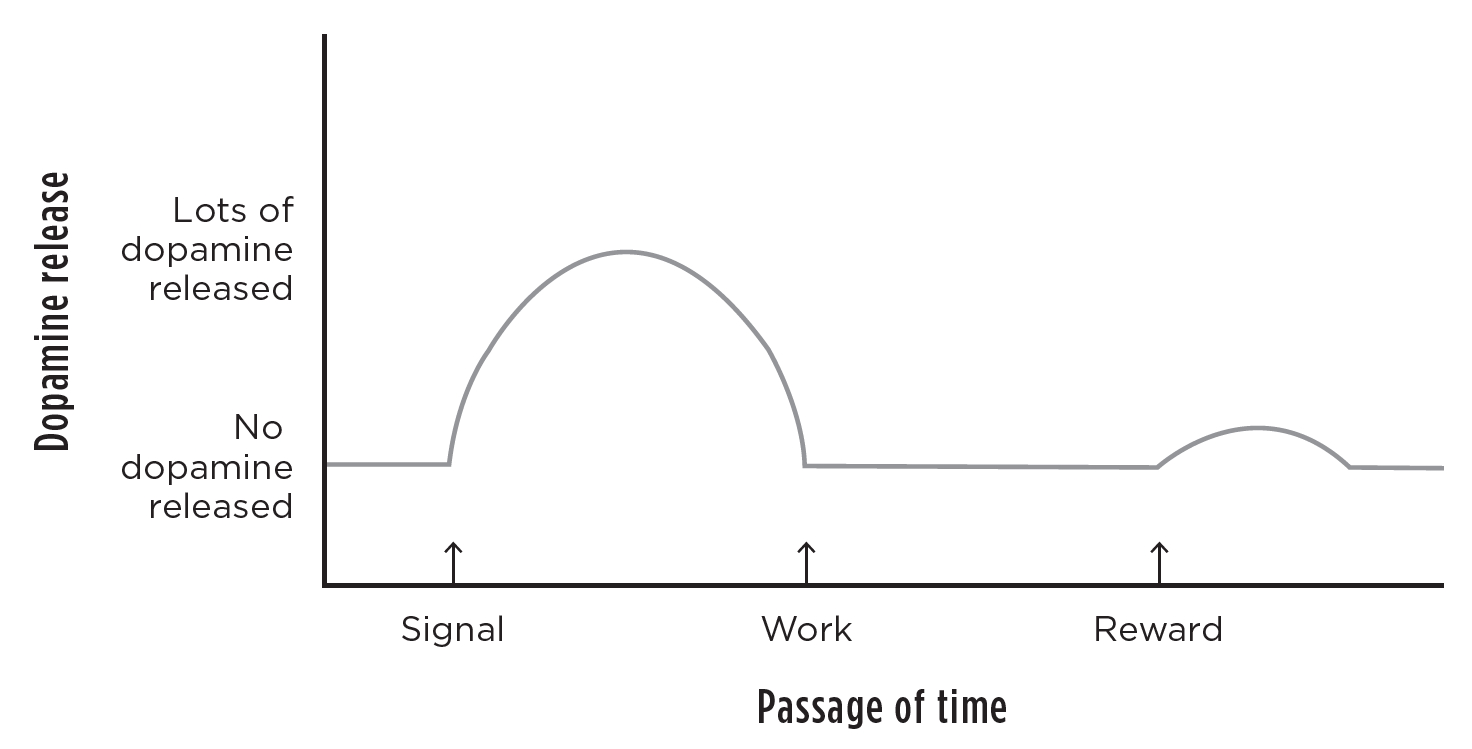
Dopamine, the reward neurotransmitter, is released when a dog anticipates a positive outcome. According to Sapolsky (2004), dopamine spikes not at the reward stage but at the anticipation of the reward; Dopamine climaxes spikes during the work phase. This makes mirror-based imitation effective: observing a human perform an action that leads to a reward (e.g., opening a cupboard to get a treat) activates the same dopaminergic pathways in the observing dog.
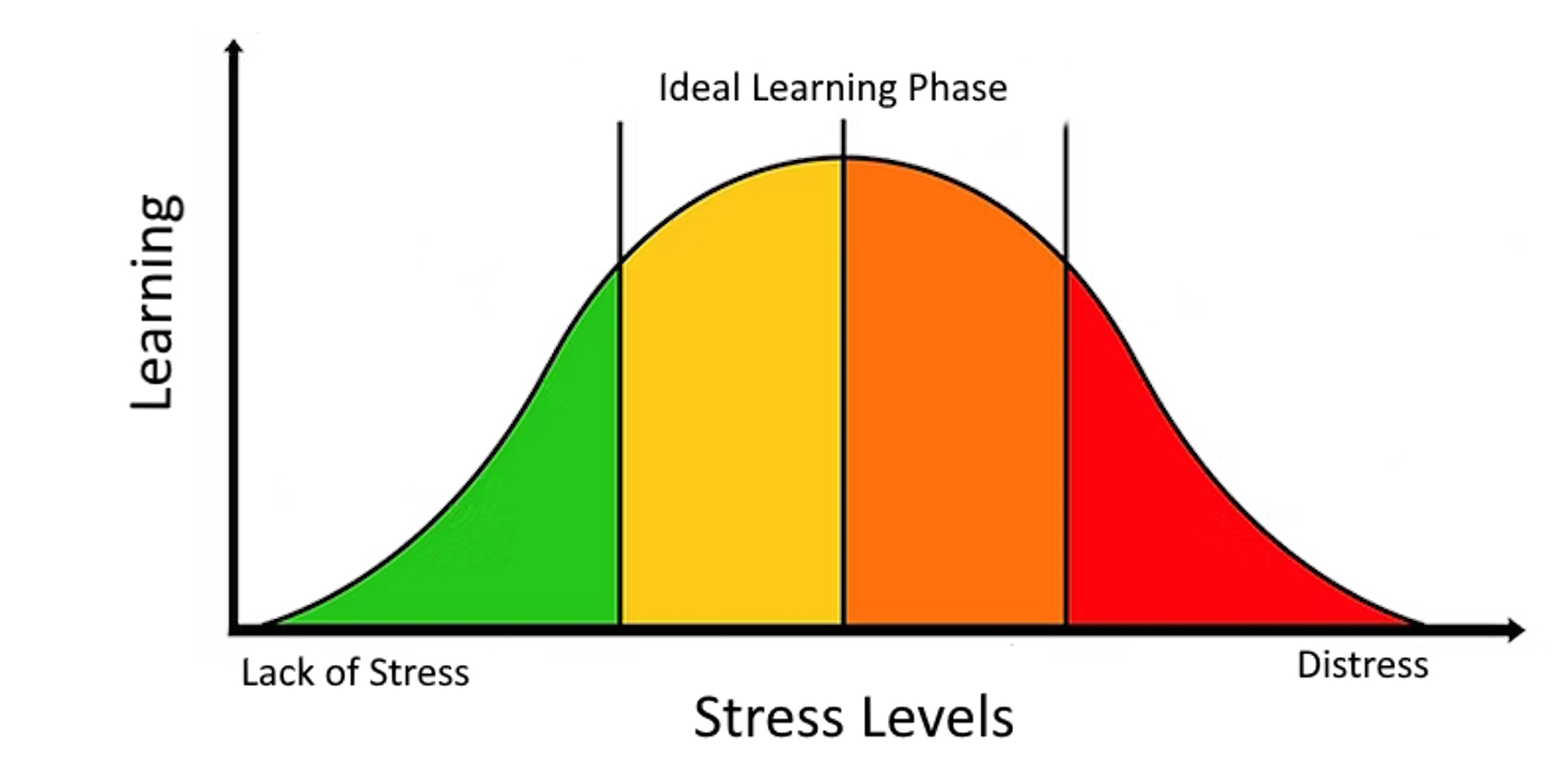
Cortisol is a stress hormone that increases during fear or uncertainty. High cortisol levels inhibit learning by impairing memory and focus. Conversely, safe social learning through attachment and empathy (via mirror neurons and oxytocin) reduces cortisol levels and promotes learning readiness (Horváth et al., 2008).
Mirror neurons are the neurological thread weaving empathy, attachment, and learning into a cohesive fabric of social cognition. Their activity enables dogs to learn by watching, feel what others feel, and form strong emotional bonds with humans. When combined with positive neurochemical responses, such as elevated oxytocin and dopamine, mirror neurons help shape behaviour not just through training, but through relationship.
From Harlow’s comforting monkey mothers to the dopamine surges during anticipation, neuroscience is painting a clearer picture of the emotional and cognitive lives of animals. Understanding mirror neurons gives professional dog trainers and caregivers a powerful framework for fostering empathy-driven, science-based learning in our canine companions.
References
- Andics, A., Gábor, A., Gácsi, M., Faragó, T., Szabó, D., & Miklósi, Á. (2014). Voice-sensitive regions in the dog and human brain are revealed by comparative fMRI. Current Biology, 24(5), 574–578. https://doi.org/10.1016/j.cub.2014.01.058
- Bandura, A. (1977). Social Learning Theory. Prentice Hall.
- Custance, D., & Mayer, J. (2012). Empathic-like responding by domestic dogs (Canis familiaris) to distress in humans: An exploratory study. Animal Cognition, 15(5), 851–859. https://doi.org/10.1007/s10071-012-0510-1
- Gallese, V., Fadiga, L., Fogassi, L., & Rizzolatti, G. (1996). Action recognition in the premotor cortex. Brain, 119(2), 593–609. https://doi.org/10.1093/brain/119.2.593
- Harlow, H. F. (1958). The nature of love. American Psychologist, 13(12), 673–685. https://doi.org/10.1037/h0047884
- Horváth, Z., Dóka, A., & Miklósi, Á. (2008). Affiliative and disciplinary behavior of human handlers during play with their dog affects cortisol concentrations in opposite directions. Hormones and Behavior, 54(1), 107–114. https://doi.org/10.1016/j.yhbeh.2008.02.002
- Nagasawa, M., Mitsui, S., En, S., Ohtani, N., Ohta, M., Sakuma, Y., Onaka, T., Mogi, K., & Kikusui, T. (2015). Oxytocin-gaze positive loop and the coevolution of human-dog bonds. Science, 348(6232), 333–336. https://doi.org/10.1126/science.1261022
- Rizzolatti, G., & Craighero, L. (2004). The mirror-neuron system. Annual Review of Neuroscience, 27, 169–192. https://doi.org/10.1146/annurev.neuro.27.070203.144230
- Sapolsky, R. M. (2004). Why Zebras Don't Get Ulcers (3rd ed.). Henry Holt & Company.
- Silva, K., Bessa, J., & de Sousa, L. (2012). Auditory contagious yawning in domestic dogs (Canis familiaris): First evidence for social modulation. Animal Cognition, 15(4), 721–724. https://doi.org/10.1007/s10071-012-0473-2
- Topál, J., Byrne, R. W., Miklósi, Á., & Csányi, V. (2006). Reproducing human actions and action sequences: Do as I do! in a dog. Animal Cognition, 9(4), 355–367. https://doi.org/10.1007/s10071-006-0051-6