
By Gaby Dufresne-Cyr, CBT-FLE
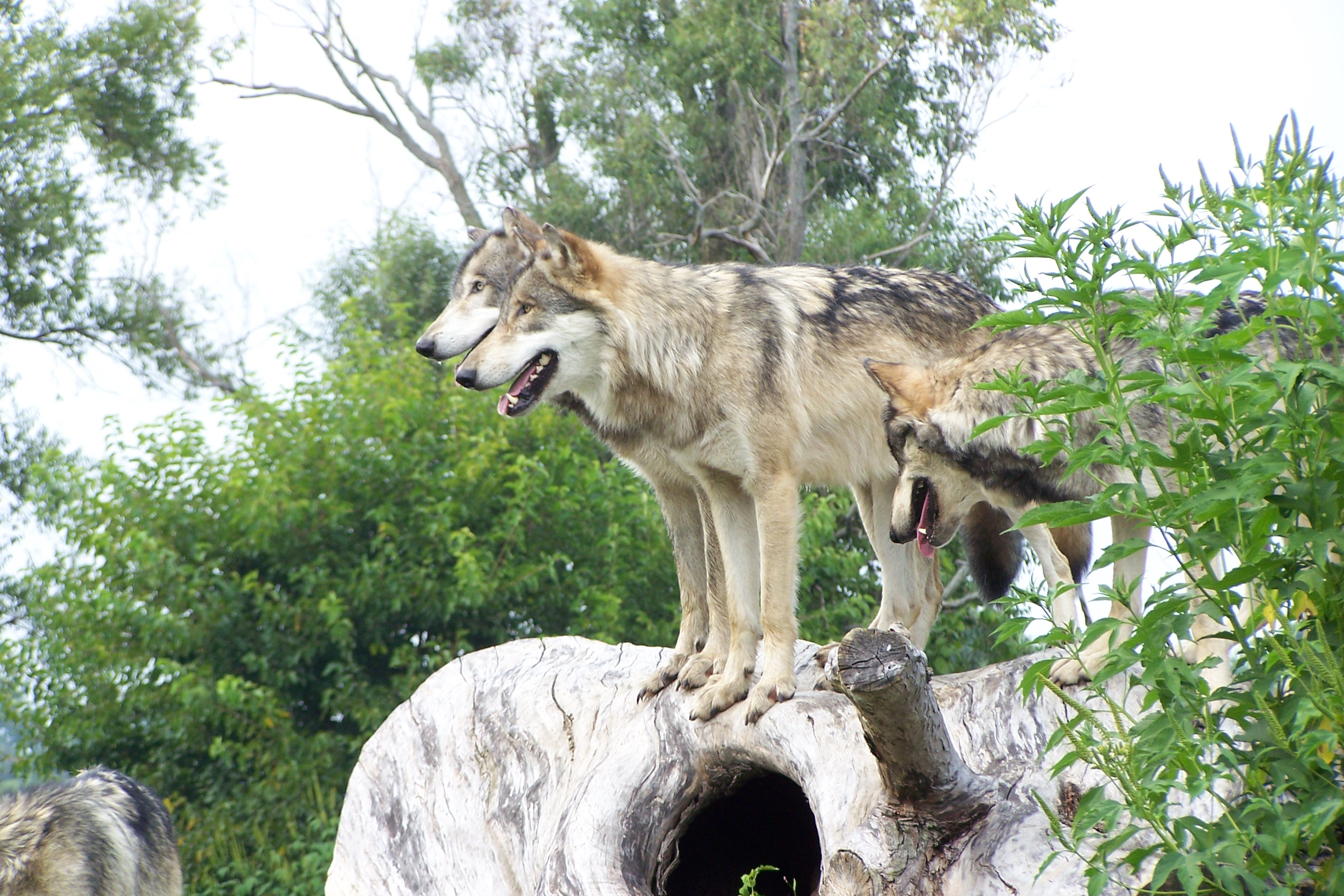
Dogs and wolves share a common ancestor and bear striking physical similarities, yet over thousands of years of domestication, their physiology and biology have diverged in fascinating ways. Understanding these differences helps to shed light on their behaviour and even their potential for bonding with humans. This blog will explore key distinctions in their anatomy, biology, and cognitive abilities, drawing from scientific research on the subject.
Evolutionary Background: How Wolves Became Dogs
Wolves (Canis lupus) and dogs (Canis familiaris) split from a common ancestor approximately 20,000 to 40,000 years ago. Wolves, as wild animals, have retained their survival-driven traits, while dogs have adapted to human environments through self-domestication. Selective breeding has led to physiological and behavioural changes that allow dogs to coexist with humans in ways wolves never could.
While both dogs and wolves have similar body structures, wolves are generally larger, with stronger jaws and more robust skeletal frames to support their wild lifestyle. Wolves can weigh between 60 to 100 pounds (27 to 45 kg), while dogs come in various shapes and sizes due to selective breeding, with some breeds weighing as little as 2 pounds (Chihuahuas) and others up to 200 pounds (Mastiffs).
Wolves possess longer, narrower skulls, and their teeth are larger and sharper than those of dogs. This is due to their need for catching prey and tearing through meat, bone, and cartilage. Wolves also have a more pronounced temporalis muscle, a key muscle involved in jaw strength, which allows them to exert greater bite force.
In contrast, dogs, particularly smaller breeds, often have shorter snouts, and their teeth are not as optimized for hunting. The domestication process has resulted in smaller teeth, which correlates with dogs’ less predatory lifestyle.
Wolves are obligate carnivores, meaning they thrive on a diet primarily composed of meat. Their digestive systems are adapted for breaking down high-protein, high-fat meals. Wolves can go for days without food, but when they do eat, they consume large quantities at once. Their stomachs are designed for this feast and famine lifestyle, and their intestines are shorter, which aids in the efficient digestion of raw meat and bones.
Behavioral and Cognitive Differences
The physiological differences between dogs and wolves extend into their cognitive abilities, particularly in terms of social behaviour and problem-solving. Wolves are highly intelligent animals, but their intelligence is geared toward survival in the wild. They are known for their pack-oriented nature, where teamwork and hunting coordination are essential.
Wolves tend to be more independent and less interested in human interaction. Studies show that wolves are more cautious and have a stronger flight response than domestic dogs when confronted with unfamiliar situations.
Dogs, through domestication, have developed a unique ability to bond with humans and excel in cooperative behaviour. Their ability to read human gestures and body language is unparalleled among animals. According to Hare and Tomasello (2005), dogs are better at interpreting human cues, such as pointing or eye direction, than wolves, even when wolves are raised by humans. This makes dogs more attuned to human emotions and commands, an essential trait for their role as companions and working animals.
Dogs and wolves share similar reproductive systems, but there are notable differences in their breeding behavior and sexual maturity. Wolves typically breed only once a year, usually in late winter, to ensure that pups are born in the spring when food is abundant. Both male and female wolves reach sexual maturity at around two years of age. The rest of the pack helps raise the offspring, ensuring the survival of the young.
In contrast, domestic dogs can breed multiple times throughout the year and are not bound by the seasonal constraints that affect wolves. They reach sexual maturity faster, often between 6 to 12 months. Due to selective breeding, dogs have lost the pack hierarchy seen in wolves, and females may mate with any male, as there is no structure controlling reproduction.
Immune Systems and Disease Resistance
Both dogs and wolves have strong immune systems, but there are differences in how they respond to pathogens due to their living conditions. Wolves have developed a robust immune system due to their exposure to various pathogens in the wild. They tend to have a greater ability to fight off infections and diseases commonly found in their natural environment, such as rabies and parvovirus.
Domestic dogs, while generally healthier due to vaccinations and veterinary care, may not have as strong natural immune responses as wolves. Over generations of living in controlled environments, some dogs have become susceptible to certain hereditary diseases, such as hip dysplasia and autoimmune conditions, which are less common in wolves.
Lifespan
The lifespan of dogs and wolves also differs. In the wild, wolves typically live around 5 years, though some may live up to 12 years in captivity where they receive regular care and food. Domestic dogs, on the other hand, can live significantly longer, with smaller breeds often reaching 15 years or more, thanks to medical care and a consistent food supply.
The physiological and biological differences between dogs and wolves reveal how domestication has shaped the modern dog into the perfect human companion. Wolves, still governed by the demands of the wild, exhibit traits that favour survival, whereas dogs have evolved to live comfortably alongside humans. From their skeletal structure and diet to their reproductive behaviour and cognitive abilities, each species has followed a unique evolutionary path, making them distinct in their roles within the natural world and human society.
By understanding these differences, we can better appreciate the bond we share with dogs and the wildness that still thrives in wolves.
References
- Axelsson, E., Ratnakumar, A., Arendt, M. L., Maqbool, K., Webster, M. T., Perloski, M., Liberg, O., Arnemo, J. M., Hedhammar, A., & Lindblad-Toh, K. (2013). The genomic signature of dog domestication reveals adaptation to a starch-rich diet. Nature, 495(7441), 360–364. https://doi.org/10.1038/nature11837
- Hare, B., & Tomasello, M. (2005). Human-like social skills in dogs?. Trends in cognitive sciences, 9(9), 439–444. https://doi.org/10.1016/j.tics.2005.07.003
- Morey, D. F. (2010). Dogs: Domestication and the Development of a Social Bond. Cambridge University Press.
- Coppinger, R., & Coppinger, L. (2001). Dogs: A Startling New Understanding of Canine Origin, Behavior & Evolution. Scribner.