
By Gaby Dufresne-Cyr, CBT-FL
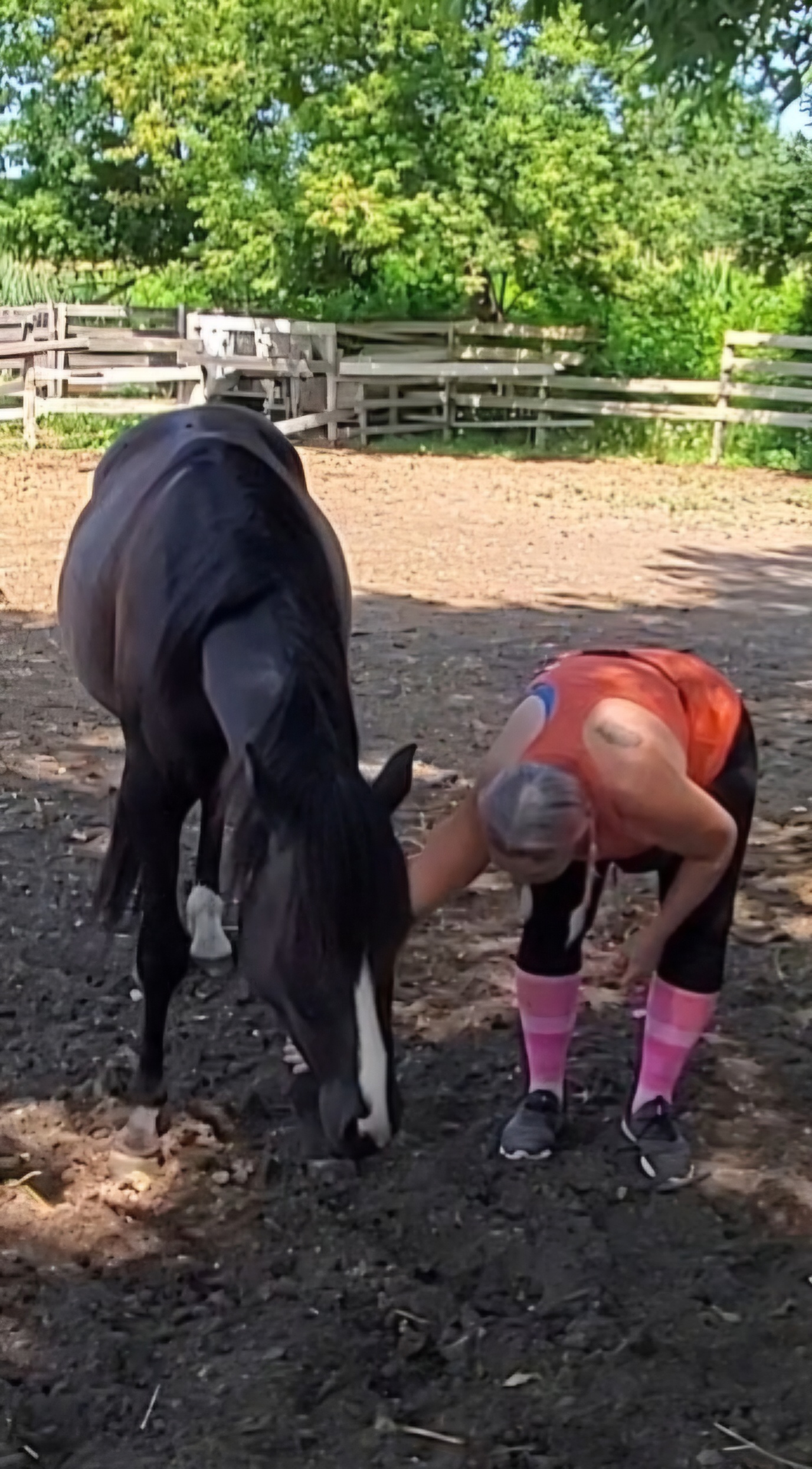
When we think of horse training, most people imagine a person holding reins and applying pressure on the bit, releasing it when the horse does the right thing. For centuries, this model, based on negative reinforcement (R-) or pressure and release and positive punishment (P+), has dominated the equestrian world. While it can produce predictable results, it does not always build deep trust and cooperation that come from mutual understanding.
Horses, like dogs, are social and cognitive learners. They possess the ability to observe, interpret, problem-solve, and make decisions based on the emotional cues of others. When I train with social cognitive learning, I move beyond mechanical obedience and into the realm of relationship-based communication.
Understanding Social Cognitive Learning
Social cognitive learning theory, developed by psychologist Albert Bandura, explains how individuals learn through observation, imitation, cognition, and emotional attachment. In animals, this means they can learn by watching others, both human and animal, without direct pressure or coercion. Applied to horses, this approach asks us to become a model rather than a master. The horse learns from our calm and consistent behaviour, and from our ability to regulate our emotions.
Instead of teaching through correction, we teach through connection. Just as we teach dogs to think rather than simply react, we invite horses to engage cognitively with their environment. This shift from control to communication fosters self-regulation, confidence, and curiosity, which are the true foundations of trust.
Why Avoid Negative Reinforcement and Positive Punishment
Traditional horse training often relies on removing pressure or applying aversive stimuli to achieve results. Pulling on the lead until the horse steps forward, applying leg pressure until the horse moves, or jerking a rein when a horse spooks or resists are all examples of methods rooted in operant conditioning. While such techniques can teach mechanical responses, they also teach horses to comply to avoid discomfort. Over time, this can dull curiosity, reduce confidence, and even cause learned helplessness or aggression.
During social cognitive horse training, I replace pressure with communication. Instead of asking how to make the horse move, I ask how can I inspire the horse to want to move with me. Teaching a social animal to problem-solve and make decisions is a sign of intelligence. When we prevent horses from thinking, we limit their creativity, intelligence, adaptability, and performance.
Building Trust Through Observation and Emotional Regulation
Horses are emotional mirrors. They respond not only to our actions but to our energy, breathing, and presence. This is where social cognition becomes essential, as horses constantly observe and interpret us.
To build trust, begin with presence, not pressure. Spend time near your horse without expectations and allow it to observe, sniff, and process you. Model calm behaviour, as horses learn safety through our regulation. Slow your breathing, lower your tone, and soften your movements. Reward curiosity when a horse approaches, touches, or engages voluntarily, marking the moment with gentle praise and a food reward.
Engage in cooperative activities that encourage choice and confidence. Ask for small, achievable tasks such as following your movement or touching a target, so the horse experiences success through voluntary participation. Always end sessions on a positive note, allowing the horse to feel safe and satisfied with the interaction. This approach transforms the training space into a dialogue rather than a command structure.
The Science of Relationship-Based Learning
Research supports that horses, like dogs, are capable of cross-species emotional reading. They can detect human emotions, facial expressions, and body language, and adjust their behaviour accordingly. This means that our internal state is part of the training process.
Social cognitive horse training taps into this natural ability. When we model patience, kindness, and curiosity, horses learn these emotional states as safe and rewarding. Over time, equids mirror our calmness rather than our anxiety. In traditional training, obedience is often a measure of success. In social cognitive training, success comes from a secure-based connection. Does your horse seek you out? Do they relax in your presence? Do they choose to follow you when not forced?
These are the accurate indicators of a strong relationship rooted in mutual respect, emotional attachment, and trust. When horses learn through social and cognitive processes, they become active participants in their own education, building their knowledge upon past learning. They do not simply perform; horses understand and trust their people.
A New Way Forward
Social cognitive horse training invites us to evolve from trainers to teachers. It challenges us to develop empathy, patience, and awareness, recognizing that horses, like us, are complex emotional beings capable of thought and choice. When we teach social animals to problem-solve and make effective decisions, their locus of control flourishes into behaviours we never thought they could perform.
Consent training is here, and I believe it is time to embrace the revolution. By teaching through trust instead of tension, we create relationships that endure beyond the arena, relationships that honour the horse’s intelligence, agency, and heart. Stepping away from conventional horsemanship, based on R- and P+, is not a simple process, but it is rewarding beyond your wildest dreams.